 Conduit Bending
Updated 2026-09-29
Short answer: true offset = √(horizontal² + vertical²). Use it as the depth of a normal offset. Roll the conduit atan(horizontal ÷ vertical) from vertical and keep both bends in that rolled plane.
What a rolling offset is
A rolling offset moves the conduit over and up (or down) at the same time: two equal bends made in a plane that is rolled between horizontal and vertical. It saves bends compared with an offset over followed by an offset up.
How to bend a rolling offset
- Measure both offsets: how far over (horizontal) and how far up (vertical).
- Find the true offset with the calculator or √(h² + v²).
- Lay out a normal offset of that depth with the multiplier and shrink for your angle (offset calculator).
- Bend the first bend, then roll the conduit so the first bend points toward where the run must go, and bend the second bend in that plane.
The formula
The box method in the field
Without a calculator, hold a square or tape at the start of the offset and measure diagonally from where the conduit is to where it needs to be: that diagonal is the true offset. Mark it on the floor or wall as a reference when rolling the conduit.
Mistakes
- Adding the two offsets instead of using the diagonal: 3" + 4" is not 7", it is 5".
- Bending the second bend without rolling, which makes a plain offset in the wrong direction.
- Measuring horizontal and vertical from different points on the pipe.
Questions electricians ask
How do you calculate a rolling offset?
Square the horizontal offset and the vertical offset, add them, and take the square root to get the true offset. Then use the true offset as the depth of a normal offset: distance between bends = true offset × multiplier, shrink = true offset × shrink per inch.
What is the roll angle?
The angle you rotate the conduit away from vertical before bending, so the offset moves over and up at the same time: roll = atan(horizontal ÷ vertical). A 4" by 3" rolling offset rolls about 53° from vertical.
Can I use the 3-4-5 rule for a rolling offset?
Yes. A 3" and 4" offset make a 5" true offset because 3² + 4² = 5². Any multiple works too: 6" and 8" make 10".
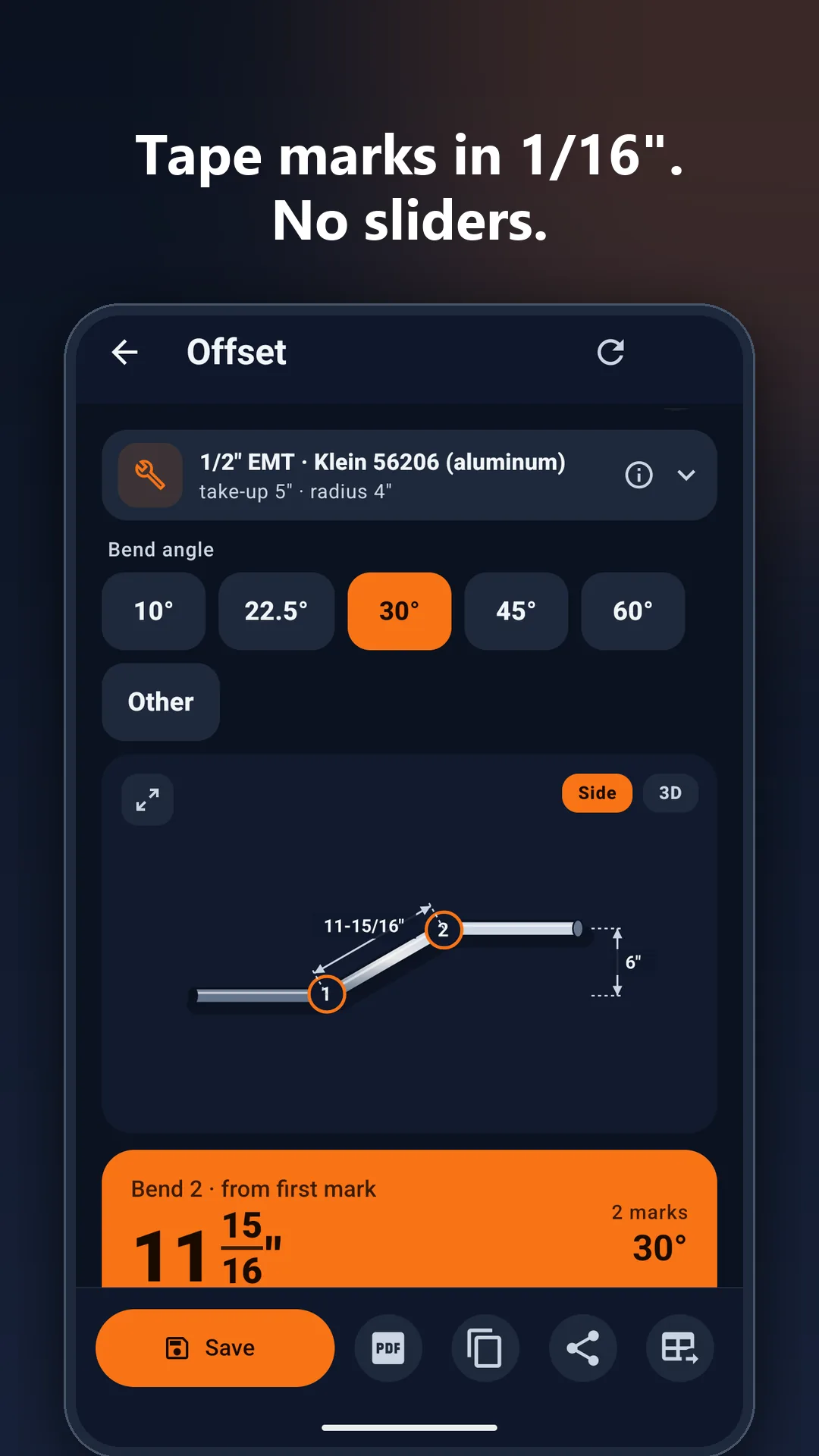
See the roll in 3D before you bend
- Isometric drawing of the rolling offset
- Both marks from the end of the pipe, with the obstruction distance
- Corrected for your bender shoe
- Parallel and matching offsets too
$7.99 one time · no subscription · no ads · works offline
Related calculators and charts
Distance between bends and shrink for any offset depth and angle.
Open →KickTravel and shrink for a single bend, or the angle from rise and run.
Open →Bending Multiplier ChartMultipliers, shrink per inch and a ready-made offset table from 1" to 24".
Open →Conduit Bending FormulasEvery formula behind offsets, saddles, 90s and kicks, with where each number comes from.
Open →How to Bend ConduitA complete hand-bender guide from the first 90 to saddles, with the marks for each.
Open →